2009/10/31

Regent hairstyle

[ . BACK to DARUMA MUSEUM TOP . ]

:::::::::::::::::::::::::::::::::::::::::::::::::::::::::::::::::::::::::::::::::::::::::::::::::::::

Regent hairstyle リーゼント(スタイル)
"Regent Daruma" リーゼントだるま


CLICK for more photos


The Regent Hairstyle in Japan
The hair is kept in place with a lot of pomade and wax.
It got its Japanese name from the Regent street in London, where it was often seen.

CLICK for more photos


gure Daruma ぐれダルマ

デザイナー: 現代美術二等兵

On his belly there is the Chinese character for

bad 悪  aku

It comes in many varieties, even as a piggy bank.


Gure Daruma in Black 黒ぐれダルマ


. . . CLICK here for Gure Daruma Photos !


:::::::::::::::::::::::::::::::::::::::::::::::::::::::::::::::::::::::::::::::::::::::::::::::::::


Pompadour
is a style of haircut which takes its name from Madame de Pompadour.

The pompadour was a fashion trend in the 1950s among male rockabilly artists and actors.
In recent years the pompadour hair style has been adopted by those enamoured with vintage culture of the late 50s and early 1960s that includes antique cars, hot rods, American folk music, rockabilly bands, and Elvis Presley.

In modern Japanese popular culture, the pompadour is a stereotypical hairstyle often worn by gang members, thugs, members of the yakuza and its junior counterpart bōsōzoku, and other similar groups such as the yankii (high-school hoodlums).
In Japan the style is known as the "Regent" hairstyle, and is often caricatured in various forms of entertainment media such as anime, manga, television, and music videos.

A pompadour is often created by combing the sides of the hair back, while fanning the top of the hair forward and curling over itself. There are numerous ways to sculpt a pompadour. Some only curl the front few inches of their hair up, while others comb their hair back and use their hands to "push" it into its desired place.
© More in the WIKIPEDIA !


ponpa ポンパ pompa
the hairstyle for girls, like Madame Pompadour
Marquise de Pompadour,
Jeanne Antoinette Poisson、(1721―64)
. . . CLICK here for Photos !


:::::::::::::::::::::::::::::::::::::::::::::::::::::::::::::::::::::::::::::::::::::::::::::::::::

Daruma Museum

:::::::::::::::::::::::::::::::::::::::::::::::::::::::::::::::::::::::::::::::::::::::::::::::::::::

2009/10/27

Taiyaki Daruma Yaki

[ . BACK to DARUMA MUSEUM TOP . ]
:::::::::::::::::::::::::::::::::::::::::::::::::::::::::::::::::::::::::::::::::::::::::::::::::::::

Taiyaki たい焼き waffle in form of a sea bream

More photos with Taiyaki Daruma


CLICK for more photos

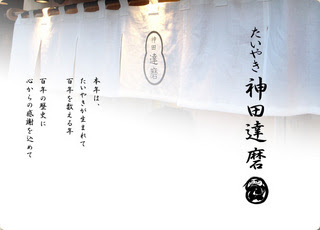
神田のたい焼き屋 達磨

A store in Kanda, Tokyo, with the Name of Daruma
Kanda no Taiyakiya Daruma
Taiyaki Kanda Daruma (たいやき 神田達磨)

Some waffles are sprinkled with sesame seeds.


神田達磨(Kanda Daruma)
2-1 Ogawamachi, Kanda, Chiyoda-ku
Tel: 03-6803-1704


Reference

:::::::::::::::::::::::::::::::::::::::::::::::::::::::::::::::::::::::::::::::::::::::::::::::::::


. WASHOKU
Figure waffles (ningyooyaki 人形焼)


another variety of Daruma Yaki だるま焼き


だるま水産株式会社
札幌市西区二十四軒3条1丁目42-1
http://www2.hp-ez.com/hp/daruma/page2

:::::::::::::::::::::::::::::::::::::::::::::::::::::::::::::::::::::::::::::::::::::::::::::::::::


Waffeln in Form einer Meerbrasse

CLICK for more photos

Diese Waffeln stillen nicht nur den Hunger nach etwas Süßem, sie bringen auch Glück für den Esser, denn das Wortspiel mit TAI (japanischer Name der Meerbrasse) und MEDE TAI (glückverheißend) bringt jedem Glück. Daher fehlen sie auf keinem Festplatz und kleinere Buden verkaufen sie vor vielen Kaufhäusern, besonders in den kalten Monaten.

Eine Waffel aus Weizenmehl, gefüllt mit süßem Bohnenmus oder Vanillecreme – das ist alles. Der Bäcker hat entweder eine getrennte Waffelform für jeden Fisch oder eine Stange mit mehreren Fischformen nebeneinander, die gleichzeitig über das Kohlenfeuer gehalten werden.
Ahnherr ist die Imagawa-Waffel von einem Laden der Edo-Zeit an der Brücke über den Fluß Imagawa im Stadtteil Kanda. Sie wird aus Weizenmehl, Zucker, Eiern und Wasser gemacht und ist einfach nur rund, mit süßem Bohnenmus oder Vanillecreme gefüllt.

Daraus entwickelten sich Waffeln in verschiedenen Tierformen, aber der TAI mit dem glückverheißenden Schwanzwort machte das Rennen.

Im Schwanzteil ist keine Füllung, den soll man am Schluß „zum Ausputzen des Mundes“ verspeisen. Wieder andere meinen, den Schwanz zuerst zu essen erhöhe das Glück bei den nächsten süßen Bissen.
Oder noch anders:
Die Herren beginnen mit dem Kopf, die Damen mit dem Schwanz. ... Japanische Lebensphilosophie!


. WASHOKU
sea bream waffles, taiyaki 鯛焼き


:::::::::::::::::::::::::::::::::::::::::::::::::::::::::::::::::::::::::::::::::::::::::::::::::::::
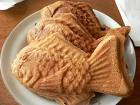

Fudoo yaki 不動焼き waffle from a Fudo Temple
Fudoyaki, Fudo-Yaki


This is more a kind of dorayaki, round waffle with red bean paste filling.

狭山不動尊 Sayama Fudo Temple 不動寺
It has been founded by Kobo Daishi.
This temple has been patronized by the third shogun, Tokugawa Iemitsu, in 1632.
It has a lot of important buildings in the precincts.
In the neighbourhood are places which specialize in food with tofu.

In Tokorozawa (所沢市, Tokorozawa-shi), Saitama prefecture.
Sayama green tea is another speciality.

. . . CLICK here for Photos of the temple!


:::::::::::::::::::::::::::::::::::::::::::::::::::::::::::::::::::::::::::::::::::::::::::::::::::::


鯛焼を割つて五臓を吹きにけり

taiyaki o watte gozoo o fukinikeri
  
I break open
a taiyaki sweet waffle and blow
on its intestines


Nakahara Michio 中原道夫

The freshly baked taiyaki are usually very hot and steam comes out after breaking htem open. People have to fuufuu blow on them for cooling.

gozoo
is an old term for the intestines, five zoo and six pu, gozoo roppu 五臓六腑.
According to the old Chinese medicine, these are the five full organs (heart, lungs, liver, spleen and kidneys), and the six hollow organs (stomach, small intestine, large intestine, gall bladder, urinary bladder and reproductive organs).


::::::::::::::::::::::::::::::::::::::::::::::::::::::::::::::::::::::::::::::::::::::::::::::::::::: 

[ . BACK to WORLDKIGO . TOP . ]
[ . BACK to DARUMA MUSEUM TOP . ]

:::::::::::::::::::::::::::::::::::::::::::::::::::::::::::::::::::::::::::::::::::::::::::::::::::::

2009/10/22

frontispice

[ . BACK to DARUMA MUSEUM TOP . ]

:::::::::::::::::::::::::::::::::::::::::::::::::::::::::::::::::::::::::::::::::::::::::::::::::::::

Frontispice (kuchi-e)
くちえ【口絵】


『安政見聞誌』「口絵の達磨」
(あんせい けんもん し)
from the magazine "Ansei kenmonshi"


〝悟れかしこれぞ禅機の無門関ゆり崩れては一物もなし〟

「一物もなし」が御叱りの対象になったのだが、梅の屋は扇面に認めたものを写し取られたと釈明して、咎を免れた〉 
"安政見聞誌"「口絵の達磨」 一登斎芳綱?画
source : www.ne.jp/asahi/kato


Illustration from 歌川芳綱 Utagawa Yoshitsuna
(fl.1848-68)
Ittosai Yoshitsuna 一登斎芳綱


The magazine "Anzei 安政" was first published around 1856. It is a reportage of the effects of the earthquake of October 1855. It showed the destruction and detailed maps of Edo.
The magazine was also called 垣魯文編 .
It had illustrations by Utagawa Kuniyoshi 歌川 国芳(うたがわ くによし) and others.


CLICK HERE for the Japanese Version of the Magazine:
http://www.jcsw-lib.net/ansei/index01.html

:::::::::::::::::::::::::::::::::::::::::::::::::::::::::::::::::::::::::::::::::::::::::::::::::::


Ansei (安政)
was a Japanese era name (年号,, nengō) after Kaei and before Man'en. This period spanned the years from 1854 through 1860.
The reigning emperor was Kōmei-tennō (孝明天皇).

Ansei 2 (November 11, 1855):
Great Ansei Earthquake in Edo, one of the Ansei Great Quakes, with resulting fire damage and loss of life.
Epicenter -- (Latitude: 36.000/Longitude: 140.000), 6.9 magnitude on the Richter Scale.
© More in the WIKIPEDIA !


http://www.rekihaku.ac.jp/kikaku/index75/namazu.html
source : National Museum of Japanese History

Namazu-E of the Ansei Earthquake


:::::::::::::::::::::::::::::::::::::::::::::::::::::::::::::::::::::::::::::::::::::::::::::::::::

Namazu to Daruma 鯰とだるま Catfish and Daruma

The Black Ships and Earthquakes


Daruma Museum

:::::::::::::::::::::::::::::::::::::::::::::::::::::::::::::::::::::::::::::::::::::::::::::::::::::

2009/10/10

chataku saucer

[ . BACK to DARUMA MUSEUM TOP . ]

:::::::::::::::::::::::::::::::::::::::::::::::::::::::::::::::::::::::::::::::::::::::::::::::::::::

Saucer for tea cup
茶托 / 茶たくchataku / cha-taku


chataku are small plates used for the small cups of green tea. They usually come in a set of five, just like the tea cups.


made from Negoro laquer


ダルマ茶托 : 根来

source : uchiki-co.com


CLICK here for PHOTOS of chataku saucers !


:::::::::::::::::::::::::::::::::::::::::::::::::::::::::::::::::::::::::::::::::::::::::::::::::::


Negoro lacquerware was produced at the temple Negoro-ji (根来寺)in Izumi province. The red layers of lacquer of the Negoro wares are intended to gradually wear away with use, revealing the black lacquer underneath. This effect has since been copied and emulated elsewhere.

Mercury was used in the production and the deities for mercury were venerated at the local temples.


. . . CLICK here for Photos of Negoro Laquer ware !


. . . CLICK here for English Information !


:::::::::::::::::::::::::::::::::::::::::::::::::::::::::::::::::::::::::::::::::::::::::::::::::::


H A I K U


銀無垢の茶托の翳り冬灯
gin muku no chataku no kageri fuyu akari

the shimmer of these
saucers of plain silver -
winter lights


Nakamura Teijo 中村汀女
Tr. Gabi Greve


:::::::::::::::::::::::::::::::::::::::::::::::::::::::::::::::::::::::::::::::::::::::::::::::::::::


Negoro Laquer ware and the Deity Niutsuhime
丹生都比女 . 根来塗(ねごろぬり)

Daruma Museum

:::::::::::::::::::::::::::::::::::::::::::::::::::::::::::::::::::::::::::::::::::::::::::::::::::::

2009/10/05

Shibata Zeshin

[ . BACK to DARUMA MUSEUM TOP . ]
:::::::::::::::::::::::::::::::::::::::::::::::::::::::::::::::::::::::::::::::::::::::::::::::::::::

Shibata Zeshin 柴田是真 / しばたぜしん
(1806 - 1891)


painter and plastic arts, laquer ware.
ZESHIN means "the truth of truths".

CLICK for more photos


. Shibata Zeshin - MAIN ENTRY .

:::::::::::::::::::::::::::::::::::::::::::::::::::::::::::::::::::::::::::::::::::::::::::::::::::::

quote
Shibata Zeshin
was a famous and revolutionary Japanese painter and lacquerer of the late Edo period and early Meiji era. In Japan, he is ironically known as both too modern, a panderer to the Westernization movement, and also an overly conservative traditionalist who did nothing to stand out from his contemporaries. Despite holding this odd reputation in Japan, Zeshin has come to be well-regarded and much studied among the art world of the West, in England and the United States in particular.

Zeshin learned not only the basics of painting and sketching, but also Japanese tea ceremony, haiku and waka poetry, history, literature and philosophy. This would form the foundation of his training in not only the techniques of the traditional arts, but also, and perhaps more importantly, the aesthetic and philosophy of Japanese traditional art. Many of his works from the period of his studies with Nanrei were fan paintings. The great ukiyo-e artist Utagawa Kuniyoshi was impressed with these fan paintings and, approaching the young painter, began a friendship which would last for many years.

Today, one of the greatest collections of Zeshin's works is the Khalili Collections of London, containing over 100 works by the artist.
© More in the WIKIPEDIA !


:::::::::::::::::::::::::::::::::::::::::::::::::::::::::::::::::::::::::::::::::::::::::::::::::::::


Shibata Zeshin: Masterpieces of Japanese Lacquer
from the Khalili Collection

(Nasser D. Khalili Collection of Japanese Art)
by Joe Earle

Combining unparalleled technical skill with a highly individual decorative style, Zeshin's paintings and lacquers are imbued with traditional humour, energy and grace, but are fully in tune with the innovative spirit of Meiji-period Japan.
source : Oxbow Books


笠につく蝶と一つに都入り
kasa ni tsuku choo to hitotsu ni Miyako-iri

on my straw hat
there is one butterfly
when I enter the capital


:::::::::::::::::::::::::::::::::::::::::::::::::::::::::::::::::::::::::::::::::::::::::::::::::::::


A Haiku Menagerie
edited by Stephen Addiss (1992)

The caged bird
envies the butterfly–
just look at its eyes!

Issa

The introduction to this collection looks at the history of haiku and Japanese woodblock books and the relationship these two media have.
Addiss discusses their printed relationship as well as direct influence such as Shibata Zeshin’s “Swallow” as a direct inspiration from an Issa haiku.

source : A Haiku Menagerie

.......................................................................


:::::::::::::::::::::::::::::::::::::::::::::::::::::::::::::::::::::::::::::::::::::::::::::::::::::::::::::::::::::::::::


English Reference

Japanese Reference


Featured in - Daruma Magazine 64 , 2009


:::::::::::::::::::::::::::::::::::::::::::::::::::::::::::::::::::::::::::::::::::::::::::::::::::::::::::::::::::::::::::

Daruma Museum

[ . BACK to WORLDKIGO  TOP . ]

:::::::::::::::::::::::::::::::::::::::::::::::::::::::::::::::::::::::::::::::::::::::::::::::::::::::::::::::::::::::::::

Meditation in Nature

[ . BACK to DARUMA MUSEUM TOP . ]

:::::::::::::::::::::::::::::::::::::::::::::::::::::::::::::::::::::::::::::::::::::::::::::::::::::

A Breath of Fresh Air

By Mark Coleman


Nature teaches us simplicity and contentment,
because in its presence we realize
we need very little to be happy.
Since we are part of the animal kingdom,
our senses are naturally more alive
in the outdoors.


Read more about meditation in nature

source : www.tricycle.com


:::::::::::::::::::::::::::::::::::::::::::::::::::::::::::::::::::::::::::::::::::::::::::::::::::


Ishi no ue san nen 石の上三年
Meditating on a stone for three years

Meditating Daruma Paintings

 Meditation, Skillful Meditation

Menpeki Kunen, Wallgazing for nine years
Daruma and Meditation

Mudra, Daruma Mudra meditation position
dharma-cakra-pravartana 


Daruma Museum TOP

:::::::::::::::::::::::::::::::::::::::::::::::::::::::::::::::::::::::::::::::::::::::::::::::::::::