:::::::::::::::::::::::::::::::::::::::::::::::::::::::::::::::::::::::::::::::::::::::::::::::::::::
Temple Jindai-ji - - A Daruma Market and Sanskrit
深大寺の達磨市と梵字
. . . CLICK here for Photos !

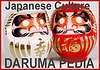
Daruma from Temple Jindai-ji in Mitaka, Chofu 調布 a suburb of Tokyo.
On the belly we have the Chinese characters representing the name of
"Ganzan Daishi" , Gansan Daishi 元三大師.
This is another name for the famous 18th head priest Ryogen of the monastic center at Mount Hiei, Jie Daishi 慈恵大師 of the Tendai sect. Because he was born on the third of January in 985, he got this name. He had great spiritual power in warding off evil in daily life and many stories of his deeds are handed down to us.
Ryōgen 良源 ( 912 – January 31, 985 AD)
was a chief abbot of Enryaku-Temple (Enryaku-ji) in the 10th century, and the founder of the tradition of warrior monks (sōhei).

source : en.wikipedia.org
Ryōgen is known generally by the names of Gansan Daishi or Tsuno Daishi "Horned Great Master".
The Horned Great Master in Engelbert Kaempfer's History of Japan (1727). On his way to Edo in 1691 Engelbert Kaempfer saw these paper glued to doorposts of many houses. His description published in the History of Japan is correct, but he wrongly called it Gozu Tennō (Ox-head-heaven-king), a deity worshiped at the Gion Shrine (Yasaka Jinja) in Kyotō.
Over the course of the 10th century, there had been a number of disputes between Enryaku-ji and the other temples and shrines of the Kyōto area, many of which were resolved by force. In 970, Ryōgen formed a small army to defend Enryaku-Temple and to serve its interests in these disputes. Records are not fully clear on whether this army consisted of hired mercenaries, or, as would be the case later, trained monks. Most likely, this first temple standing army was a mercenary group, separate from the monks, since Ryōgen forbade monks from carrying weapons.
In addition to the prohibition on carrying weapons, Ryōgen's monks were subject to a list of 26 articles released by Ryōgen in 970; they were forbidden from covering their faces, inflicting corporal punishment, violently interrupting prayer services, or leaving Mount Hiei during their 12-year training.
He is also called "Master Warding Off Evil" (mayoke daishi 魔除大師、gooma daishi 降魔大師).
There was a statue of Ganzan Daishi in the temple Jidai-ji, but in the Muromachi period there was a great fire and only this statue was saved, since it flew all by itself into the nearby pond 五大尊池. This episode even strengthened the belief of the people in the supernatural powers of this great master, which is alive until our days. The unification of this Great Master and Daruma san to ward off evil should have a double effect on your good luck, so on the yearly temple festival on Marach 3 and 4 there is a big Daruma market in the temple grounds, where you can buy all kinds of good-luck Daruma dolls.
You can ask a priest to paint in the left eye, in this case not the round pupil but the first syllable of Sanskrit A 「阿」 to indicate the beginning of your good-luck period. When the wish is fullfilled, you have the syllable UN 「吽」, the last syllable of the Sanskrit alphabet painted in the right eye. A is the first sound pronounced while opening your mouth, it is the origin of all sounds and represents the origin of all life, the woumb. UN is the last sound when closing your mouth. (A-UN is the Japanese pronunciation; usually we know this sound as the holy mantram OM or AUM.) In this way at Jindai-ji you have a reliable means to reinforce Daruma san's already salutary properties.
We find these symbols of open and closed mouth also for example in the pair of lion-dogs (koma-inu 狛犬) sitting on both sides of the entrance to a shrine or temple, warding off any evil spirits. A can also be interpreted as the entrance to life and UN the entrance to death.
In esoteric Buddhism there is also a tradition to meditate on a hanging scroll of this syllable as the symbol for Buddha, called "Visualisation of the Syllable A" (ajikan 阿字観), which we will study a little more further down this story.

The Sanskrit letter A
In the Daruma rendering of Jindai-ji we can feel the history of Daruma coming from India, going through many changes on the way and now through the painting of the eyes being the condensed symobl of the people's wish for long life, happiness, warding off evil and getting benefits in this world.
By the way, there is one more temple in the Kanto area where Ganzan Daishi is revered and an annual Daruma market is held, the Kita-In of Kawagoe 川越の喜多院.
. Kawagoe Daruma 川越だるま神輿
According to Prof. McFarland, we can also learn this about Jindai-ji temple.
The Daruma market at Jindai-ji is held in March, closer to the traditional New Year of the Chinese lunar calendar and the beginning of spring. So this event is also called the "inviting of spring" (haru o yobu 春を呼ぶ), as the saying goes:
"In Tokyo spring follows the Jindai-ji Daruma market." Normally the Daruma markets are held on the first three days of the new year in January, to get your good luck for the rest of the year.
The Temple Jindai-ji 深大寺
The temple Jindai-ji is one of the oldest in Tokyo, coming right after the famous Kannon temple in Asakusa and is well known for its Daruma market. After a visit to the temple you can enjoy a meal of buckwheat noodles, another speciality of this area. The main deity enshrined in this temple is Amida Nyorai.
東京では浅草寺についで古い歴史を持つ寺で、春のだるま市は大変賑わう。門前町はほとんどが深大寺そばを食べさせる店である。
There is the beatuiful old entrance gate with many stickers from the pilgrims over the years. You can also see the bronze gong called "Crocodile Mouth" (waniguchi 鰐口).
http://www.jindaiji.co.jp/jindaiji.html


The temple sells of course a lot of talismans and auspicious votive pictures connected with Ganzan Daishi and Daruma Daishi.
元三大師降魔札 だるま絵馬

A New Year arrow for good luck (hamaya 深大寺の破魔矢)
There is also a special beer with the name of the temple. Try it on the way home.
深大寺ビールもありますよ。ご参拝の後にぜひ試してね。
. . . CLICK here for Photos !
The annual Daruma market at Jindai-ji on March 3/4 三月の達磨市
Some dealers still carry their Daruma dolls in baskets of woven bamboo in the oldfashioned way.
. . . CLICK here for Photos f the daruma market!
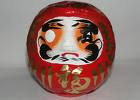
After you buy a Daruma, the priest fills in the eye for you, as we have learned.
ご住職が目をいれてくれます。
Jindai-ji also features a Pet Cemetery. 動物の墓地

There is a special Kannon Statue for the Animals
(choojuu Kannon 鳥獣観音)
:::::::::::::::::::::::::::::::::::::::::::::::::::::::::::::::::::::::::::::::::::::::::::::::::::::
The temple is named after Jinja DaiOo 深沙大王
Jin 深ja Dai 大Oo
深沙大将 (じんじゃだいしょう)Jinja Daisho, Jinja Taisho Jinja Taishō
Jinja Shin、深沙神

aka - Tobatsu Bishamonten 兜跋毘沙門天
Protects Capital Cities & Repulses Foreign Invaders
aka Tōhachi Bishamonten 刀八毘沙門天
aka Kōmyō Dai-ō 光明大王 (Great Radient King)
aka Jinja Taishō 深沙大将 (Great General of the Desert)
Says scholar Rosenfield (pp. 181-183):
"This is a notably unfamiliar subject that emerged from Chinese folktales about the [Chinese] pilgrim Xuanzang 玄奘 (Genjo Sanzo) (602–664), whose journey to India and return is one of the central episodes in the transmission of Buddhism in East Asia. Apocrypahl stories describe Xuanzang striding across the deserts west of Dunhuang, losing his water flask, and becoming desperately thirsty and discouraged. He dreamed of a giant figure with halberd who urged him to continue; soon he came to an oasis and was saved. In Chinese commentaries, the giant was an avatar of the Divine King Vaiśravana (Jp. = Bishamon).
A folk cult and its imagery thus developed in China and were transmitted to Japan in the 9th century. There the Desert General became well-enough recognized to be illustrated in the Esoteric Buddhist ritual handbook complied by the Japanese monk Kakuzen 覺禪 (active 12th century). The general also appears as Bishamon in a 14th-century Japanese handscroll illustrating Xuanzang's journey to India .......... emerging from the [statue's] skirt are the heads of two flayed elephants. Adapted from an Indian custom of clothing gods in animal skins, the elephants imply that the deity is endowed with power superior to that of the animal."
source : Mark Schumacher
- - - Legend knows this:
Saint Manku Shonin 満功上人 was the founder of Jindai-Ji.
His father Fukuman 福満 fell in love with the daughter of Sato Osaukon 郷長右近(さとおさうこん), but her parents were not happy about this relationship and banished the daughter on an island in the sea. Fukuman was remembering the travels of Genjo Sanzo 玄奘三蔵 on his way to India and prayed to Jinja Daioo for help.

And what do you know . . . there comes a sacred turtoise 霊亀 and he sat on its back all the way to the island. Now the parents were convinced the two belonged together and allowed the wedding.
Born was Manku, who tried to atone for his father's sins by becoming a monk of the Hosso sect in Kyoto 法相.
When he came back home, he used the two characters of the name for his new temple
Jin 深ja Dai 大Oo = 深大寺 Jindai-Ji.
The temple is blessed with clear water, flowing into the fields below, thanks to the "God of the Water".
source : www.jindaiji.or.jp/about
:::::::::::::::::::::::::::::::::::::::::::::::::::::::::::::::::::::::::::::::::::::::::::::::::::::

akagoma, akai koma 赤駒 red horse
赤駒を山野 に放し捕りかにて
多摩の横山徒歩ゆか遣らむ
akagoma o sanya ni hanashi torikanite
Tama no yokoyama kachiyukayaramu
A red horse has been released into the fields and has run away.
Am I going to lose my husband in the wilderness of Tama.
There is already a poem about this horse in the Manyo-Shu poetry collection from 759.
It is about a loving wife who had to let her husband go to war in far-away Kyushu and wished to have him back safely.
An amulet you buy for someone you love, to wish him/her well.
Some stores near the temple started to make this simple straw horse by hand, one by one even now since 1997, but before that it had been out of making for a while.
. Horse Amulets of Japan .
:::::::::::::::::::::::::::::::::::::::::::::::::::::::::::::::::::::::::::::::::::::::::::::::::::::
The Sanskrit Alphabet 梵字、種字
One of the specialities of this temple is the painting of Sanskrit letters in the eyes of Daruma. The use of Sanskrit syllables is especially common in esoteric Buddhism. After all Buddhism came from India and Sanskrit is the old written language of this area. The Greek alphabet starts with ALPHA and ends with OMEGA whereas the Sanskrit uses A and UN or OM, as we have seen.
In esoteric Buddhism every Buddha or deity is represented by one or more syllables of this Sanskrit alphabet. These important syllables are also called "Seed Syllables"(shuji 種字). There are special Mandalas where the deities are represented only by these letters, each one on a little lotus flower.
. Seed sylable mandala 種字 曼陀羅
Let us have a closer look at the eyes of Daruma and the two chracters written in them.
On the following HP you can find the seed syllables for every deity. This is a very useful dictionary, even if you do not read Japanese. Click on any of the names to find the according syllables.
梵字学典と種字の説明の便利なHPです。見たいものをclickして下さい。 釈迦三尊 阿弥陀三尊 薬師三尊 不動三尊 大日三尊 四天王 五大尊 五如来 胎蔵界五仏 金剛界五仏 六地蔵 胎蔵界中台八葉院 九曜星 法華曼荼羅
- source - tobifudo.jp/bonjisho/
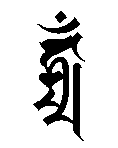
For example here is bonji for the Wisdom King Fudo Myo-O, one of my favorite deities.
And Fudo Myo-O in the garden of the temple

source : facebook

source : Toshiaki, facebook
. Fudō Myō-ō, Fudoo Myoo-Oo 不動明王 Fudo Myo-O
Acala Vidyârâja – Vidyaraja – Fudo Myoo .
A-UN representing the beginning and end of all things-maybe the best rendering of this idea is found in the two huge figures of Nioo-Guardians at the entrance of the temple Todai-ji in Nara.
東大寺の仁王門の阿吽仏像がそのアイディアをよく強調しているかもしれない。
. Nio, Deva Kings 仁王 (Nioo, Nio) A-Un 阿形 吽形
:::::::::::::::::::::::::::::::::::::::::::::::::::::::::::::::::::::::::::::::::::::::::::::::::::::
The Ajikan Visualisation 阿字観
This is a special method of meditation found in esoteric Buddhism. You sit in front of a scroll with a Sanscrit letter in a circle, usually the letter A, and meditate on its meaning. Since each deity has its own letter, you can use others too.
http://www.shingon.or.jp/ajikan.htm
Here are the three syllables for the Buddhas Dainichi, Fudoo and Aizen.

Chookyuuji, Temple Chokyu-Ji 長久寺三尊(大日・不動・愛染)
Esoteric Buddhism and the founder of Zen, Daruma Daishi,
in happy coexistence at this temple of Tendai Esoteric Buddhism
- what can we learn from this?
:::::::::::::::::::::::::::::::::::::::::::::::::::::::::::::::::::::::::::::::::::::::::::::::::::::

December 8 - 13, 2011
Exhibition at Temple Jindai-Ji to help Tohoku

Housewifes made these little "Chofu Daruma" 調布だるま
and sold them, the profit going to support Fukushima.
福島と絆だるま展 Fukushima to Kizuna Daruma
at the gallery 曼珠苑ギャラリー
. Earthquake Darumam, Kizuna Daruma .
. Jindaiji Daruma Karinto 深大寺だるまかりんと .
karintoo 花林糖 Karinto, fried dough cake
:::::::::::::::::::::::::::::::::::::::::::::::::::::::::::::::::::::::::::::::::::::::::::::::::::::
H A I K U
observance kigo for the New Year
Ganzan Daishi-E 元三大師会 Ceremony for Ganzan
January 28.

At night with only candles.
.................................................................................

いつも来る綿虫のころ深大寺
itsumo kuru watamushi no koro Jindai-Ji
I always come here
when the cotton flies are out ...
temple Jindai-Ji
Ishida Hakyoo, Ishida Hakyo 石田波郷 (1913-69)
His grave is in the precincts of this temple.
More haiku about temple Jindai-Ji
きさらぎの蓬を焚けり深大寺 宮岡計次
たか~と冬満月や深大寺 角川春樹
みほとけの深大寺村栗を買ふ 及川貞 榧の實
三月やまづ水神の深大寺 鈴木しげを
佛ゐぬまに鶏とそばくふ深大寺 中勘助
元日のすみれ咲きをり深大寺 鈴木しげを
先生の見てゐる落葉掃きにけり(深大寺) 細川加賀 『生身魂』
半日の落葉を踏みぬ深大寺 綾部仁喜 樸簡
地の鴉木の鴉冬の深大寺 殿村莵絲子 雨 月
地の鴉赦して冬の深大寺 殿村莵絲子
山門に梅の添ふ頃深大寺 三浦文恵
幾泉見て初詣深大寺 皆吉爽雨 泉声
新蕎麦に間のある風の深大寺 秋篠光広
春めける深大寺絵図草のいろ 長内艸骨
春惜しむ深大寺蕎麦一すすり 皆吉爽雨
昼ごろは杉菜の長けて深大寺 藤田あけ烏
木蓮の美しかりし深大寺 角川春樹 夢殿
松杉の秀は深大寺月のもと 皆吉爽雨 泉声
水引のひとすぢくもる墓前かな(深大寺) 岸田稚魚 『萩供養』
波郷忌の深大寺道穢土浄土 下村ひろし 西陲集
泰山木に雪あつきかなまた雪に(二月二十八日深大寺に波郷埋骨) 角川源義 『冬の虹』
深大寺ほとけおはすぞ馬に鞍 中勘助
深大寺みち綿虫の大きかり 大山さちを
深大寺丈余の切子ともりけり 肥田埜勝美
深大寺五月幟や水ぐるま 中勘助
深大寺旗垂れてゐる大暑かな 谷古宇巧一
深大寺暮色俄かや齋のあと 下村ひろし 西陲集
深大寺無患子拾ふ十あまり 柴崎忠雄
深大寺蕎麦が熱くて年の暮 大嶽青児
深大寺蕎麦にあづかる年忘 上田五千石 琥珀
深大寺蕎麦を啜りて年賀かな 星野麥丘人
炎天となるおん墓のうらおもて(深大寺) 細川加賀 『傷痕』
田を植ゑて深大寺村しづかなり 岩田昌寿 地の塩
秋晴の彼も一人や深大寺 星野麥丘人
source : HAIKUreikuDB
:::::::::::::::::::::::::::::::::::::::::::::::::::::::::::::::::::::::::::::::::::::::::::::::::::
般若心経 : Heart Sutra
written as a mandala with sanskrit letters
. Bonji Daruma 梵字だるま with sanskrit letters
. Hamaya 破魔矢 an arrow for the New Year
Me-ire - Painting Eyes for Daruma 達磨の目入れ Daruma and his EYES
. Amulet with 元三大師 Ganzan Daishi .
tsuno daishi 角大師 Great Teacher with Horns
from temple Shitenno-Ji Osaka 四天王寺

:::::::::::::::::::::::::::::::::::::::::::::::::::::::::::::::::::::::::::::::::::::::::::::::::::::
[ . BACK to WORLDKIGO . TOP . ]
[ . BACK to DARUMA MUSEUM TOP . ]
:::::::::::::::::::::::::::::::::::::::::::::::::::::::::::::::::::::::::::::::::::::::::::::::::::::







 Posts
Posts